
Types of Apex Triggers in Salesforce
There are two types of Triggers in Salesforce: trigger FirstTrigger on Account(before insert) { System.debug(‘I am before insert.’); } Trigger SecondTrigger on Account(after insert) { System.debug(‘I am after insert.’); }
Accessing Hierarchy Custom Setting data
You can similarly try accessing the Hierarchy Custom Setting data with the following methods. To return a custom setting data set record for the current logged in user. Use the getInstance() method. To return a custom setting data set record for a specific userId/ProfileId, Use the getInstance(userId/ProfileId) method. To return the custom setting record data set for the […]
Accessing List Custom Setting data
We can access the data using the custom settings methods. They are all instance methods, that is, they are called by and operate on a specific instance of a custom setting. To fetch the custom fields associated with a list setting, use getAll() method. It returns a map of data set names and custom setting records. […]
How to create a Custom Settings?
Search for Custom Settings in your setup, and create new Custom Setting and enter the required information in the fields. Note: If the setting type is disabled, go to schema settings from setup and enable “Manage list custom settings type”. Now, create Custom fields under the custom setting definition that we just created. Now Click […]
What is CRM
CRM stands for customer relationship management, or the process of managing interactions with existing and prospective customers during the sales process. Any strategy or approach that uses data to build, improve and manage customer relationships can fall under the description of ‘CRM,’ but the term is most commonly used in reference to CRM software or technology. What […]
The complete guide to Salesforce field history tracking
Here’s the agenda: Enabling field history tracking for standard and custom objects Anatomy of the history object (aka how Salesforce stores field history) Field history tracking limitations Querying field history with SOQL Viewing field history on record detail pages Building field history reports What fields should have history tracking? Enabling field history tracking For standard […]
Fields in Salesforce

Types of Fields in Salesforce Custom fields are your secret weapon for adapting Salesforce to your unique business requirements. Here’s what you need to know about its types: Standard Fields in Salesforce Salesforce has its set of pre-built standard fields like Name, Email, and Phone. These fields are common to all Salesforce objects with examples […]
Salesforce Custom Objects and Standard Objects: Explained
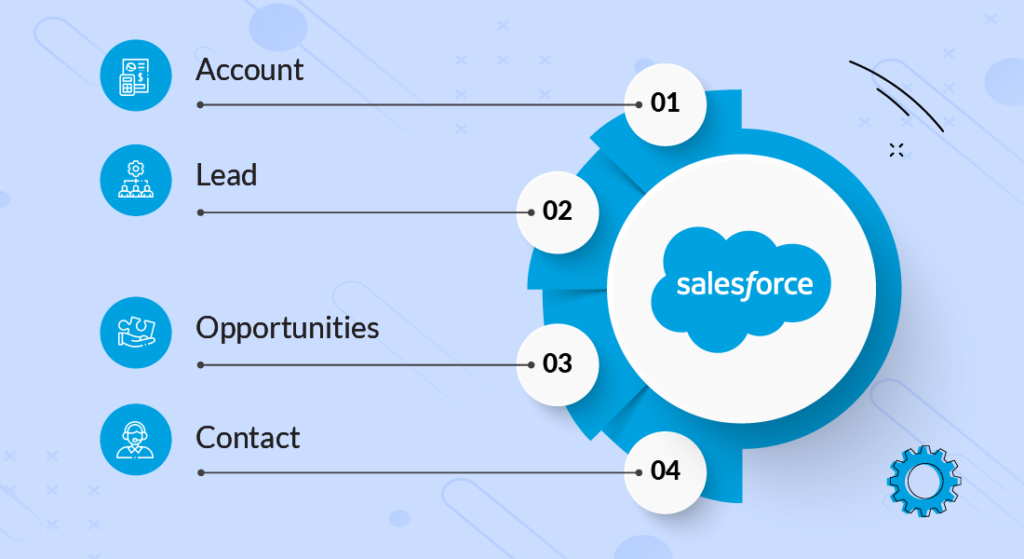
What are Salesforce Standard Objects? The standard objects are the database tables that Salesforce creates by default. The objects include accounts, reports, organization names, contacts, leads, and opportunities in standard objects in Salesforce. Salesforce has pre-built features that make the standard objects and adds all essential information. The existing objects are suitable for efficient configuration […]
Salesforce Architecture – And Different Layers of Salesforce

Architecture of Salesforce First, let’s see some important points to get introduced to Salesforce: Salesforce is a cloud company, and it offers a trusted and multi-tenant cloud. The Salesforce platform is the foundation of Salesforces’ services. It is powered by metadata and is made up of several different parts, such as data services, Artificial Intelligence, and robust APIs […]
Salesforce Lightning Components – A Begginers Guide

What are Salesforce Lightning Components? The Salesforce Lightning Components are nothing but user interface (UI) frameworks that can be used by salesforce developers for building interactive desktop applications and mobile technologies. The Salesforce Lightning components can be reused and are self-contained too. Basically, the lightning framework was created by Salesforce to develop endless applications and […]
